The law and the Games
Olympians turned lawyers on the parallels between high-performance sport and professional success
Growing up as an athlete taught Tricia Smith values that the four-time Olympian rower says shaped her later success in law and business.
“It’s why I volunteer in sport,” says Smith, who won a silver medal at the 1984 Olympic Games in Los Angeles.
“When sport is done right, it’s got the ability to teach life lessons that I know build confidence, bravery, fair play and respect. You learn how to plan for and navigate those huge tasks or goals.”
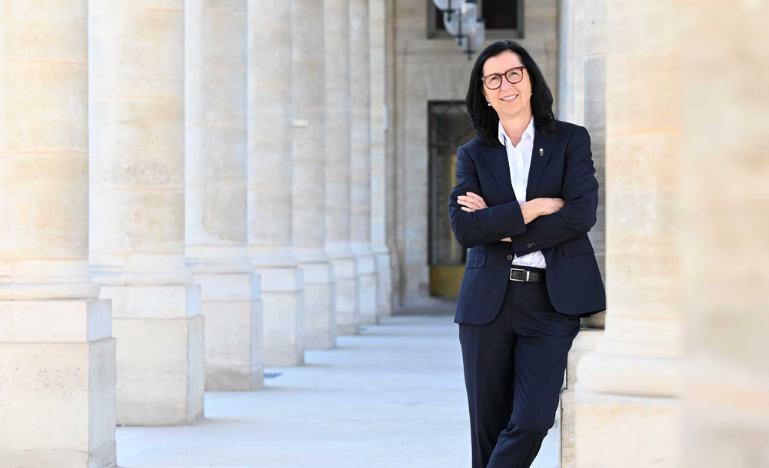 Tricia Smith
She graduated from law school in 1985 and practiced law during and after her rowing career. She’s been the president of the non-profit Canadian Olympic Committee (COC) since 2015 and was a partner at Barnes Craig & Associates in Vancouver.
She spoke to National as she prepared to leave for the Olympic Winter Games in Northern Italy, and says when she looks back on what she’s learned and achieved, she credits excellent coaches who personified teamwork.
“You don’t build trust without respect and integrity,” Smith says. “Not everyone has had that experience, and that’s why I say sport, when done right, has this power.
“Sport builds our country stronger,” she adds. “It brings a country together like nothing else.”
Smith wants that solid training ground available and affordable for every Canadian family, and has repeatedly called for more funding to develop the next generation of athletes.
Official Olympic firm
She also hails the financial and legal support of Fasken, the official law firm of the COC and the Canadian Paralympic Committee (CPC). The international firm’s partnership with the Games dates back to 2015 and was renewed through 2032 in 2024.
“We’re really grateful for that,” Smith says.
Clarke Barnes, the firm’s managing partner, heads a team of more than 900 lawyers and 2,000 staff across 10 Canadian and global offices, including Toronto, Montreal, Calgary, Vancouver, Johannesburg, and London.
While the games are underway, Fasken will set up “athletes’ villages” in its reception areas across the country.
“We encourage people to come together and watch,” he says.
“The Olympics are a unifying experience for Canadians. Our participation in various fundraising events – and just being such a big supporter and sponsor – has also been unifying for our firm.”
Fasken’s pro bono services for athletes and national sports organizations include negotiating and drafting contracts, as well as co-op calls and consultations.
The firm also helps the COC and CPC with questions on rules and regulations, as well as other governance issues.
Fasken’s fundraising efforts include bolstering Canada’s Paralympic movement through the One Hour at a Time campaign. It encourages members to give the equivalent of an hour of their billable time or to make a donation.
 Clarke Barnes
Barnes will attend several events in Italy for the last week of the Paralympics, to be held from March 6 to 15.
“I believe I’m the only one that will be there from Fasken, but I’m proud to be there and wave the flag with our other supporters.”
Like Smith, he sees parallels between high-performance sport and professional success.
“What are the Olympics about? It’s the pursuit of excellence,” Barnes says.
“We have some of the most talented lawyers in North America who are doing exactly the same thing. I don’t want to overplay it, but we face a lot of the same types of pressures in our practices.”
A 2023 online survey by Deloitte of 1,100 employed and previously employed Americans aged 18 or older explored the link between sports and career achievement.
Of the women athletes surveyed, 85 per cent said related skills were important for their professional success. For women in leadership roles, 91 per cent echoed that sentiment, as did 93 per cent of women who made $100,000 or more.
Perseverance and grit
For the ultimate proof that battling for improbable athletic glory can influence an entire lifetime, consider businessman and retired corporate lawyer George Hungerford.
He and Roger Jackson went from unknowns to national heroes when they won the coxless pairs rowing final at the 1964 Olympics in Tokyo – Canada’s only gold medal at those Games.
They pulled off an upset for the ages just two months after Hungerford was bedridden with mononucleosis.
“It’s not what the doctor recommended,” Hungerford, now 82, says from Vancouver.
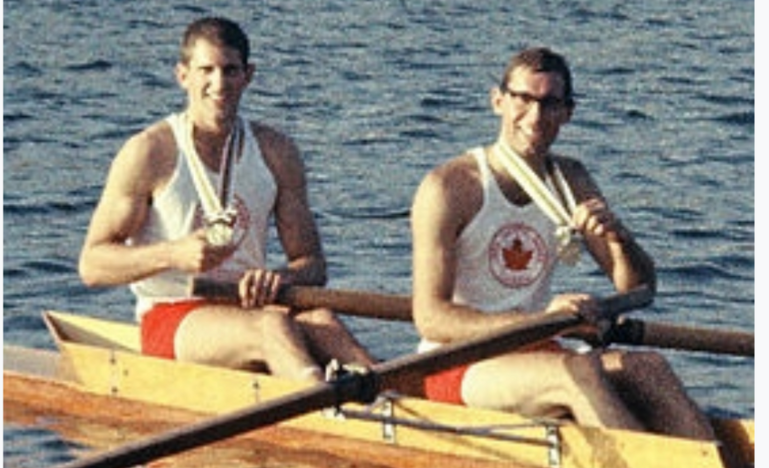 George Hungerford (left) and Roger Jackson
With the Games just weeks away, he had lost his spot on the men’s eight crew but approached his coaches as soon as he felt stronger.
They decided to team up Jackson and Hungerford, even though Hungerford had never rowed a pair and was still recovering.
“(Roger) wasn’t thrilled to be stuck with me. (He) was super motivated and ready to go. I wasn’t. We had to work through these challenges and work out a game plan.”
In a matter of weeks, the two men learned to row together with no dedicated coach and a “subpar” training boat.
They removed the rudder, forcing them to focus on perfect balance and synchronicity – a risky but time-shaving move Hungerford believes made the difference.
When they got to Tokyo, the Americans lent them a spare boat crafted by famed English racing shell designer George Pocock.
They once again removed the rudder and were so fast during a time trial that the coach told them his stopwatch must have glitched.
After winning their heat with a time that shocked the rowing world, they took the gold in the final with a photo-finish thriller.
“It was just an incredible experience, to go all that way from lying in bed in July to being on the podium in October,” Hungerford says.
The perseverance and grit of those weeks would later serve him well as a senior business partner at what was then known as Fasken Martineau DuMoulin LLP, and when he helped build the firm McLean Hungerford and Simon.
“That mental toughness you get from a sport like rowing came with me to the practice. I think it really assisted my relationships with partners, staff and clients,” Hungerford says.
It helped him balance work and family commitments while giving back to the community. He also won a lifelong friend in Jackson.
“We talk regularly. We went through a lot together, and that was, to me, as important as the gold medal.”