The vexing problem of vexatious litigation
Often driven by mental health issues, these cases affect the day-to-day functioning of the courts and consume valuable public resources

A vexatious litigant, a frivolous litigant, and an abusive litigant all walk into a courtroom…
That’s not the set-up for a bad joke; it’s the topic of the latest Verdicts & Voices episode.
“When you're talking about problematic litigation in Canada, the language which is used in these matters [is] either abusive, vexatious or frivolous,” says Donald Netolitzky, K.C., a retired complex litigant management counsel for the Alberta Court of King's Bench and one of Canada's foremost experts on vexatious litigation.
Despite their differences, the three terms are sometimes confused.
“Vexatious has a very simple commonplace meaning. It means that you're a problem, you're out to hurt somebody, you're out to vex them,” he told host Alison Crawford.
On the other hand, frivolous litigation involves trivial matters. That said, the term is somewhat problematic, given that the litigants themselves don’t consider their actions frivolous.
Abusive, meanwhile, refers to people who misuse processes, regardless of their intentions.
All three types of litigation affect the day-to-day functioning of the courts. Netolitzky says they induce friction and make everything that should be easy much harder.
“This is really a mental health phenomenon, in my opinion, more than anything else. Courts are not intended to handle people's mental health issues.”
Court staff are supposed to help individuals, clerks, and judges move litigation forward so people can resolve their disputes, Netolitzky says. But it becomes a challenge if court staff are dealing with people who are “highly confrontational, potentially aggressive, and who may be skeptical about the operation of the courts themselves.”
Appeal courts are disproportionately affected by the distillation effect. As litigation goes through courts, the proportion of problematic litigants increases.
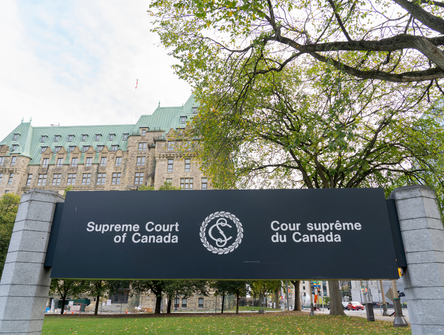
“By the time you get to the Supreme Court, sadly, probably at least 70 per cent of the individuals I surveyed in 2017 had an abusive litigation record, and 40 per cent of them were actually identified as having mental health problems too,” he says.
This kind of litigation also has practical effects.
“For institutions, it's public resources that get consumed. Something important to keep in mind with these individuals is that problematic litigants are almost always initiating litigation or initiating steps. It's very uncommon that they're on the other side,” Netolitzky says.
And because these litigants think they're engaged in justified actions, they don’t like the labels vexatious, frivolous, and abusive. As a result, they are often hostile to the institutions and individuals on the other side.
“Being a lawyer or a litigant on the opposite side is a real challenge. Not only just professional complaints, but the anger and the rage that comes across, that occurs with these scenarios,” Netolitzky says.
“If you go to institutions like the Federal Court of Canada, a large proportion of their litigation is spurious, abusive, and targeting the government. Ultimately, the taxpayers are the ones who are paying, regardless.”
There's also a heavy impact on the individuals who launch this litigation, and many experience severe distress.
Earlier this month, Justice Nicholas Devlin of the Court of King's Bench of Alberta Justice encountered such a scenario. He issued a decision in a house purchase case that included a compassionate paragraph on vexatious litigation and the applicant’s mental state.
“The court sincerely hopes she is able to find relief from the obviously compulsive distress the sale continues to cause her, going on five years later. That relief will, however, not come from the court and must not come at any further expense in time, stress or resources to innocent parties,” he wrote.
So, how do courts deal with this kind of litigation? Unfortunately, Netolitzky says the major issue with our current system is that courts can often only deal with these cases after the fact.
“The way that we set up case law to deal with problematic litigation is really two-fold. There's litigation, and then there's litigants. Those are quite different in what we look for.”
There are indicia of problematic or abusive litigation, patterns that show up repeatedly in people's behaviour.
“You see that they won't follow court orders, they won't pay costs, they repeat accusations over and over again, and they make appeals without merit. And there's personal conduct too, in that they will allege things like corruption, denigrate opposing parties, lawyers, and judges, and they're generally rude. That's fine for identifying someone who is already in the pathway, but it doesn't anticipate future conduct. So, it's a backwards, punitive sort of process.”
Again, mental health is a major factor in all this. Mental health professionals say the best approach is to intervene as early and firmly as possible. However, our court system just isn’t set up to facilitate that effectively. Netolitzky says the rules are that courts only intervene when there's an established pattern of problematic litigation. There has to be persistent conduct, which is problematic.
“That doesn't really make a lot of sense, because once you know the patterns of mental health that lead to abusive litigation, it's fairly easy to actually pick up that you've got somebody who is potentially in one of these pathways because they're making allegations which are disproportionate,” he says.
“They are focusing on trivial things or procedural things and making excessive claims. All that hints that there's a querulous individual.”
Listen to the full episode to hear Netolitzky’s ideas for how courts can curb the effects of vexatious, frivolous, and abusive litigants, and which jurisdictions in Canada are doing the best job of keeping them from draining court resources.