Ensuring crime doesn’t pay
The Supreme Court of Canada weighs in on forfeiture
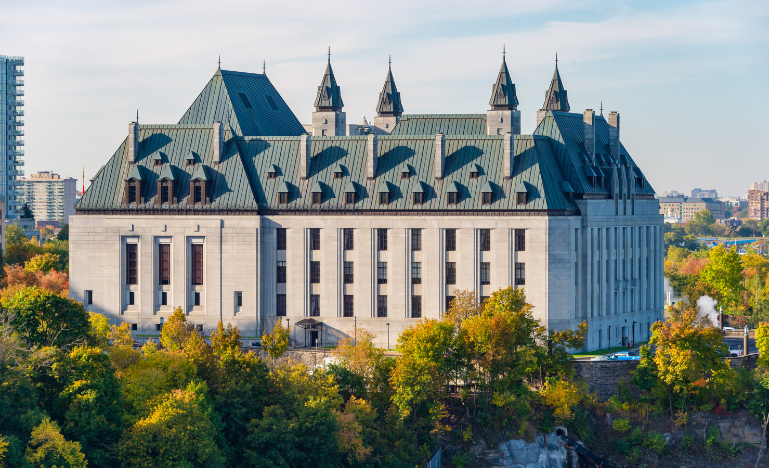
What happens to property confiscated in a police investigation and subject to a forfeiture order when charges have been stayed under Jordan timelines? That was the question the Supreme Court of Canada grappled with in the matter of Thi Huyen Gguyen and family, seeking to ensure that crime does not pay.
The case at hand dates back to 2013 and police raids linked to a marijuana grow-op in the Montreal area. They seized tens of thousands of dollars in cash and homes, which later expanded to include additional properties in British Columbia. There were also restraint orders placed on properties so that when two of them were sold, the proceeds were frozen.
Of the family members charged, Manh Hung Nguyen, who is not a party in the Supreme Court case, pleaded guilty to producing cannabis in 2016 and was sentenced to 12 months in prison. The Crown stated it did not have evidence regarding his wife and son, but ordered the forfeiture of a house belonging to her, which had housed one of the plantations.
By December 2017, the remaining eight co-accused had their charges stayed due to delays exceeding the limits set out in Jordan. They applied to the Quebec provincial court to have their seized property returned, arguing a stay was tantamount to acquittal. The Crown applied to have the seized property forfeited. The co-accused applied to have the forfeiture application dismissed, arguing that the provincial court lacked jurisdiction to consider the matter.
A Superior Court judge disagreed and dismissed that application. The Quebec Court of Appeal later granted their appeal, agreeing that the provincial court lacked jurisdiction. However, it declined to order the return of the seized property.
The Supreme Court of Canada unanimously allowed the appeal in part. It remanded the matter to the provincial court, saying it did indeed have jurisdiction to hear the forfeiture application, just under a different provision.
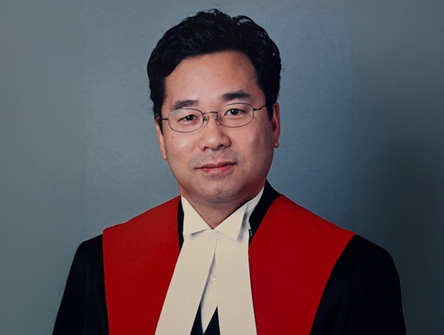
“The stay has no decisive effect on the forfeiture proceedings,” Justice Nicholas Kasirer wrote for the Court.
“The matters required to establish that the property is criminally tainted were not decided in the respondents’ favour in a prior criminal proceeding, such that it is open to the Crown to lead evidence on those issues to support its forfeiture application.”
While the provincial court could no longer consider forfeiture as part of sentencing proceedings, the Court pointed to other provisions in the Criminal Code and the Controlled Drugs and Substances Act that were available to the Crown to argue for forfeiture.
“Parliament has provided for a number of circumstances in which forfeiture can be ordered even where no accused has been tried,” Kasirer said.
“In these proceedings, the Crown will bear the burden of showing beyond a reasonable doubt that the respondents’ possession of the property is not lawful and that there is no known lawful possessor to whom the property can be returned.”
Counsel for the co-accused did not respond to a request for comment on the decision.
Tony Paisana, a partner with Peck and Company in Vancouver and former chair of the CBA’s criminal justice section, says the decision provides important clarification that a judicial stay or an acquittal doesn’t foreclose the Crown from seeking to forfeit property, animated by the principle that crime doesn’t pay.
“What’s interesting about it is what its potential ramifications are for civil forfeiture,” he says.
Jody Berkes of Berkes Law in Toronto, who is also a former chair of the CBA’s criminal justice section, pointed out that the Crown has never needed a criminal conviction to seize offence-related property.
“The civil forfeiture regime has been in place for many years,” he says.
“I’ve had the Crown withdraw criminal charges against my clients and then move forward with civil forfeiture.”
Paisana says in British Columbia, criminal forfeiture is exceptionally rare because the civil forfeiture system is so robust.
“Most of the time in criminal cases, under Criminal Code provisions, the property is ordered returned to the person with the expectation or the belief that civil forfeiture will come along and restrain the property through its process,” he says.
“While overlapping in some ways, that system has different considerations.”
For him, the question that’s not resolved in this decision is the extent to which these principles extend to civil forfeiture.
“The interesting thing about civil forfeiture is that the lawsuit is not against the person but against the property,” Paisana says.
“In this legal way, the state sues the property and says you are the proceeds of crime or the instrument in unlawful activity, and you should be forfeited. It’s very much focused on property rights.”
He can foresee a different conclusion in civil forfeiture, particularly in circumstances where the evidence was obtained in violation of the Charter.
“The question becomes if evidence was collected illegally to prove the criminal offence or the underlying point in the civil forfeiture action, how does that interact with this idea that you don’t give money back to committed crimes?” Paisana asks.
Paisana adds that way the Court resolved the question before it makes sense, saying that certain Criminal Code provisions require a finding of guilt in order for forfeiture to follow, while others do not. Whatever resulted in the criminal prosecution coming to an end is not connected to the criminality of the seized item, and that Crown should have a path open to them in order to seek forfeiture.
“You can imagine situations where clearly something is the proceeds of crime, but it’s only by virtue of the evidence being excluded that the prosecution failed,” he says.
“That doesn’t change the quality of what the item was and why it should be forfeited. There are circumstances where this clarifies and plugs a hole that might have otherwise existed.”