From order to law
Former police officers on why they left their beats for the books
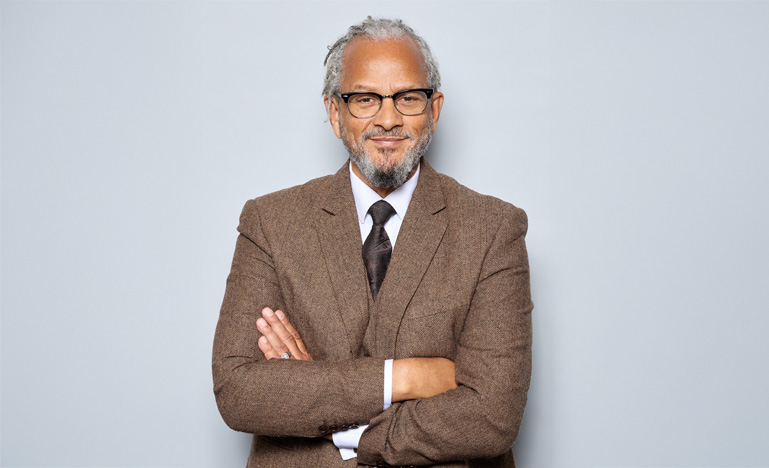
After 30 years in law enforcement, former police officer Alain Babineau knew he wanted to stay busy in retirement. So, he went to law school.
“What interested me the most is being able to help the most vulnerable in our community, in our society,” he says of his decision to become a lawyer on the latest episode of the Verdicts & Voices podcast.
Working in policing, where the application of the law has real consequences, can build unique perspectives on the relationship between enforcement and justice. For Babineau, it inspired him to take the leap into law.
“In policing, it's about enforcement. The word forcing is to make somebody do something they don't really want to do. So, when you study the law, it's more about the interpretation of the law and the nuances … It's very different.”
Babineau is a mediator and an expert in racial and social profiling. He’s currently articling at the Ontario Bar Association.
Along the way, some people told him that, given his experience in policing, criminal law would be easy for him.
“Well, not really,” Babineau says.
“Again, it's interpreting the law, it's finding nuances that are part of the law. In policing, you don't have that.”
Former RCMP officer Louis-Philippe Thériault also went to law school after taking a leave of absence from the force in 2018. He was inspired to pursue law after becoming involved with a group that would later become the current professional association.
That had him working alongside lawyers and exposed him to the inner workings of labour law. At the same time, he was involved in advocacy and the defence of members’ rights.
“I quickly discovered that often lawyers have the answer to a question or a solution,” he says.
“I became increasingly interested in learning more, seeing what I can do to help my peers.”
Thériault practices corporate commercial law at McInnes Cooper in Moncton, New Brunswick, but initially intended to return to the RCMP in a new capacity as a legal professional.
That didn’t go as planned.
After 11 years on patrol duty, Thériault was keen to use his law degree to work with the force and potentially help members. However, he was told by the RCMP that he would be sent back to patrol.
“That’s a nail in the coffin, really. That same week, I just wrote my letter of resignation, seeing that there was no will from management for a member like me with my experience to do something else.”
Thériault says the RCMP has an approach to law that can be very black-and-white.
“It was, you're a bad guy, or you're a good guy. You're with us, or you're against us. And that was the predominant attitude."
When he stepped away from policing and began working with people in criminal law, he realized the law is full of gray areas.
“Everybody's got their story. Everybody comes from somewhere different, and it's not ‘you're a bad guy, you're a good guy.’ It is for some, but the majority of people, no, you’re (in the) middle.”
In terms of how the RCMP incorporates legal education into the training of new cadets, Babineau feels it’s sufficient.
“It's more of a situation where they must enforce the law in a fair-handed and respectful way. But for them to know the nitty gritty of legal principles, I don't think that's necessary.”
Thériault agrees that officers don’t need to know all the details of legal principles, but he says having criminal defence lawyers teach the content is beneficial. Before joining the RCMP, he did his two-year police foundations course and was taught by an ex-criminal lawyer with 30 years of experience. Then, at the RCMP, he was taught by a police officer who had been taught by another, and so on.
“Right in my first week, I saw some stuff that wasn't super accurate as far as case law or procedure,” he says.
Although the force doesn’t really like having outsiders teach new cadets, Thériault says they can benefit from being taught by practicing criminal lawyers.
One perspective he’s gained from his time in policing that he finds valuable as a lawyer is his ability to look at things from different angles, like an investigator.
“It's that ability to think outside the box,” he says.
“When you look at a problem, you eliminate possible solutions, and whatever remains, it's probably your solution that works. Instead of jumping directly to one conclusion, you go through that investigative step and look at it from all the experience you've acquired over the years and try to analyze a problem.”
Babineau says his policing background taught him a respect for rules that he brings into his legal studies. Handling a lot of paperwork, conducting lengthy investigations, and navigating appearances in judicial proceedings have helped him become familiar with the legal process.
“Being on the stand and testifying and all these sorts of things, it's a good preparation for legal practice.”
Listen to the full episode to hear why Thériault left a criminal law firm to keep his friends in policing, and why Babineau stopped working with the Montreal police on issues of racial profiling.