Go for launch
While new launch legislation could support a robust space industry in Canada, experts say it’s a missed opportunity to regulate the sector comprehensively

Despite being a leader in space exploration, Canada has been a laggard in space regulation.
But as the federal government takes steps to change that with the recent tabling of the Canadian Space Launch Act, legal experts say the legislation could support a robust space industry in Canada. Unfortunately, it misses an opportunity to regulate the sector comprehensively.
However, experts say the way the government is moving legislation forward matches the political realities the country is facing.
“The space sector has wanted to see this regulation for years, and all of a sudden it's being sped up, and I think [the geopolitical moment] is a big reason why,” says Cassandra Steer, an independent consultant on space law and policy.
“It's exciting. There are great benefits that come out of Canada thinking about itself in this strategic way.”
Longstanding lack of launch capability
While this country has advanced capabilities in some aspects of space exploration, such as robotics, that hasn’t been true of its legislation for space launch and re-entry. Historically, Canada’s approach to space regulation has been piecemeal, with launches covered by an array of legislation primarily intended for aviation, including the Aeronautics Act, the Carriage by Air Act, and the Secure Travel Act.
That’s been mirrored by a lack of launch capacity: Canada is the only G7 country without its own launch capabilities and is entirely dependent on the United States to get satellites into space.
Recently, Canadian companies have begun to fill this gap, including Maritime Launch Services, which is developing a multi-user spaceport in Canso, Nova Scotia, and NordSpace, which is pursuing a commercial spaceport in southern Newfoundland and Labrador. This spring, the federal government awarded Maritime Launch Services $200 million and NordSpace roughly $850,000 for a 10-year lease of a dedicated space‑launch pad, as well as for the development of an orbital launch vehicle and very low-earth orbit satellite technology, respectively.
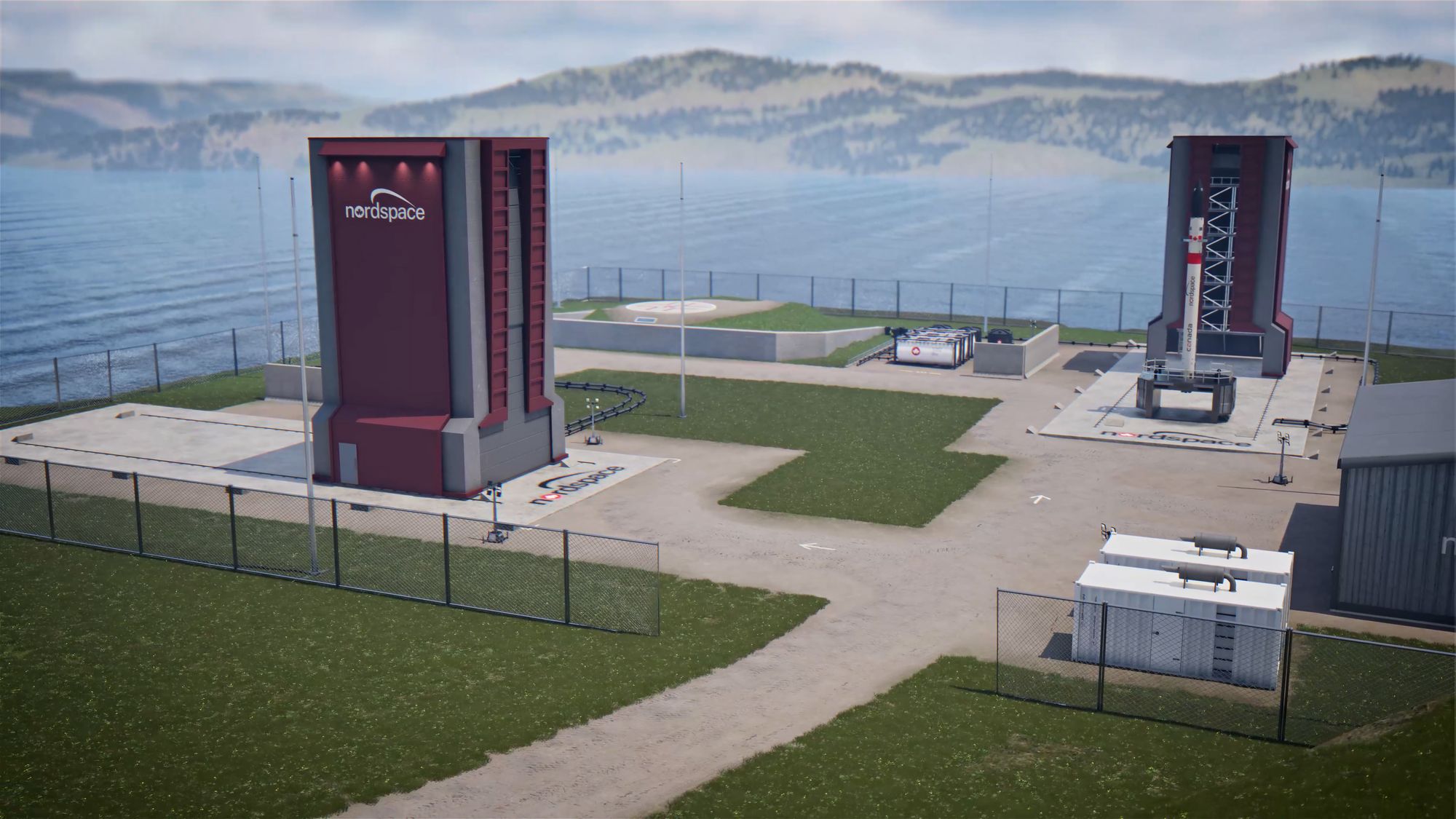
Render of NordSpace's Atlantic Spaceport Complex SLC-01 in Newfoundland and Labrador (NordSpace Photo)
Yet these developments had been happening in a regulatory vacuum — one that’s been difficult for companies to navigate, as Steer says there has been no clear permit process or safety standards specific to launch activities.
“It's complicated, it’s not comprehensive, and it makes it extremely slow — it gets in the way of innovation.”
Fatima Atik, legal counsel at the Quebec company GHGSat, which conducts satellite monitoring of greenhouse gas emissions, says this piecemeal approach has likely caused Canada to miss out on opportunities created by the explosion in lower-cost satellite launches and the surging interest in dual-use technologies (such as satellites that can be used for civil purposes and defence).
“Delays from our end probably cost us some opportunities as a global leader.”
This has also forced Canada into a deferential position relative to U.S. regulations; the only piece of space-specific legislation in Canada, the Remote Sensing Space Systems Act, was written to align with U.S. national security interests and prioritizes American companies and data at the expense of Canadian earth observation capabilities. Steer says the current push for space regulation “falls in line with our … strategic autonomy and our desire to really rethink how intertwined we are with the U.S.”
The Canadian Space Launch Act, which has passed first reading in the House of Commons, addresses this gap by amending the Aeronautics Act to create legislative powers that specifically target launch and re-entry.
“The concept is that once you have the regulation in place, you have certainty for the industry,” says Leslie Milton, partner at Fasken Martineau DuMoulin LLP.
“That will allow the industry to grow and hopefully thrive and certainly serve both Canadian domestic commercial interests as well as potentially defence and government interests.”
She expects Canadian regulations to mirror frameworks in other jurisdictions, such as Australia and the U.S., with a focus on financial responsibility and on protecting public health and safety, as well as the environment, both on Earth and in space. Canada will likely rely on international standards for technical requirements and risk assessments.
Atik, a member-at-large of the CBA’s air and space law section, says that, compared to other countries, Canadian legislation is missing details in one key area: financial liability. Under international space law, states bear unlimited liability for launches from their jurisdiction. Governments can then choose to cap liability for operators — as the UK has done, at £60 million — or ask operators for unlimited indemnification. Currently, the Canadian legislation states that indemnification by and of operators is at the minister’s discretion.
“That doesn't provide clarity at all,” she says.
Jack Nelson, an assistant professor at Thompson Rivers University whose research focuses on space law, expects to see indemnification provisions fleshed out in the regulations, since the issues around indemnification (and therefore, access to insurance for operators) are well known from other jurisdictions.
“Insurance is incredibly important to the whole industry,” he says.
“It's not really feasible to be putting together your whole proposal … and then being told that you're going to need a billion dollars’ worth of insurance, the premiums of which your company simply cannot afford. So, I think [Canada] needs to provide some kind of steering on that.”
‘The momentum of the moment’
Nelson says the legislation represents a missed opportunity, as it narrowly addresses launch without attempting to regulate all aspects of space activity, as Australia and the UK have done. Bill C-38 plugs the largest gap in Canada’s fragmentary regime, but still leaves holes.
“I would have thought, given where our regime was at before the introduction of this bill, that the better path forward was … comprehensive space legislation.”
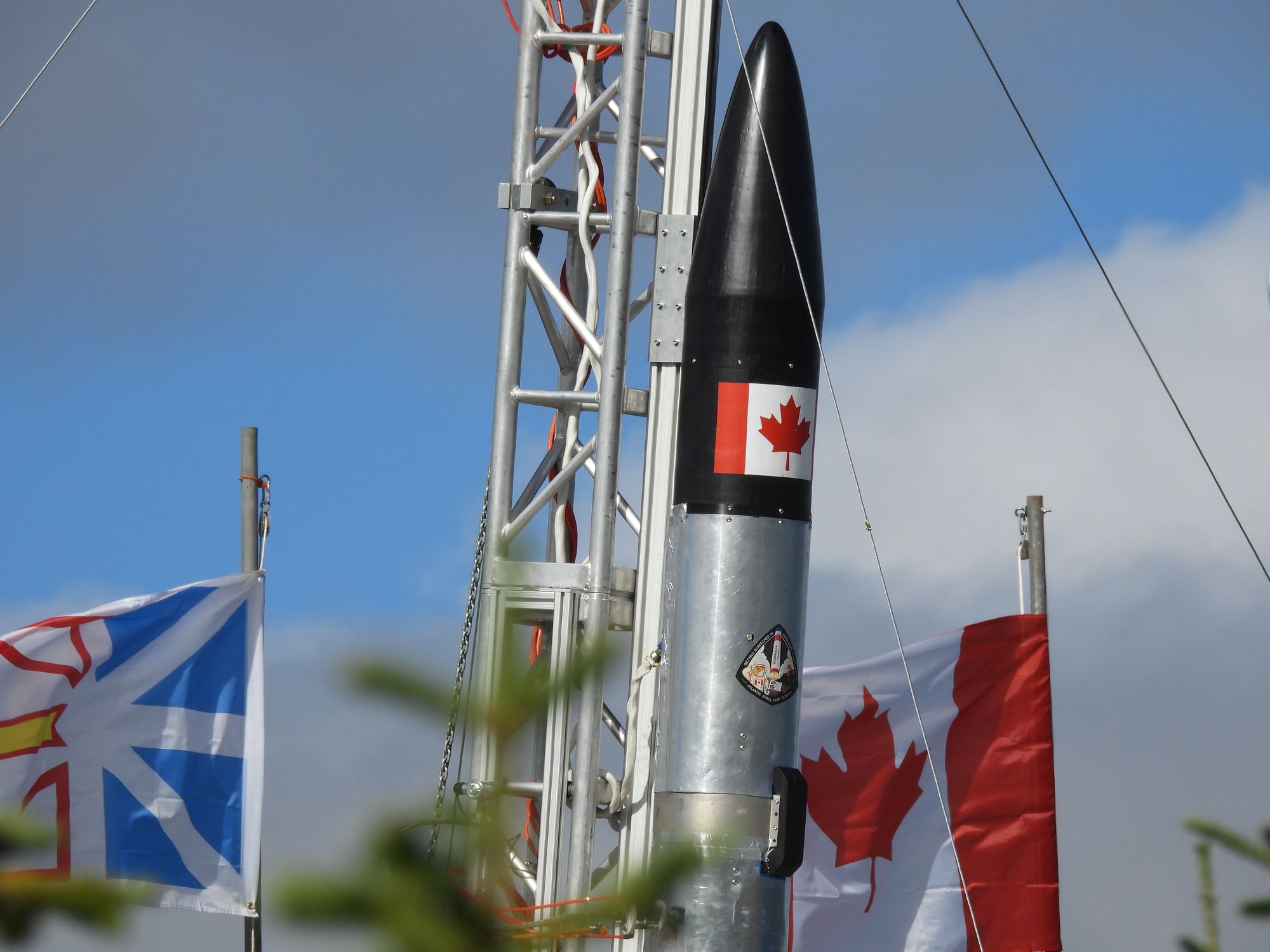
Taiga sub-orbital rocket ready for first launch by NordSpace in September 2025.(NordSpace Photo)
Atik agrees, saying that while legislation that covers the industry broadly (such as the EU Space Act, which also addresses cybersecurity and sustainability) would be a better way forward, the Canadian Space Launch Act seizes the momentum of the moment.
“Given the geopolitical context, I think we are in a position where we have to act and not just proceed via the usual legislative mechanisms. It just takes too long, and we're already way behind.”
Still, the question of legislation, while important, may matter less than other kinds of government support. The regulatory regime in the U.S. is also fairly fragmented, Nelson notes, and that hasn’t prevented the industry there from becoming the largest in the world, thanks to strong federal government support as an anchor customer.
A robust Canadian space sector will depend on this government’s willingness to do the same, Nelson says.
“I think the biggest thing that would precipitate a really strong, vibrant Canadian commercial space industry is those government contracts.”