Members
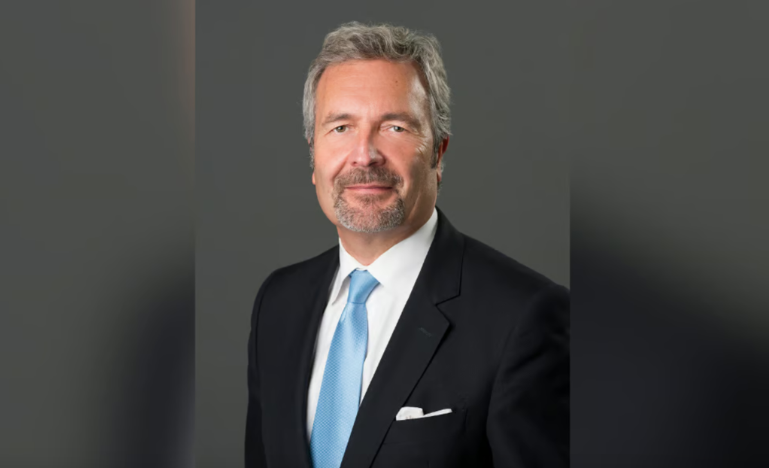
Chief Justice Glenn Joyal nominated to the Supreme Court of Canada
Long-time member of the Manitoba bench described as a fair, open-minded, and nuanced thinker who will bring a sense of stability to the Court
BY Holly Lake 22 Jun. 2026

Log in to listen to this article
Prime Minister Mark Carney has nominated the Honourable Glenn Joyal to the Supreme Court of Canada.
A Manitoba judge for nearly three decades, Joyal has been chief justice of the Court of King’s Bench since 2011. He was first appointed as a judge of the Provincial Court of Manitoba in 1998 and joined the Court of Appeal of Manitoba in 2007.
“The Supreme Court of Canada is a pillar of our democracy, safeguarding the rule of law and the rights and freedoms that define our country,” Carney said in a statement Monday morning.
“Throughout his career, Chief Justice Joyal has demonstrated the integrity, experience, and sound judgment that service on our highest court demands. I am confident that he will serve Canadians with distinction.”
Federal Justice Minister Sean Fraser said Joyal has shown he has what the role demands.
“His work to improve access to justice, modernize court operations, and advance reconciliation reflects a deep commitment to the fair administration of justice. He is an outstanding nominee to serve on Canada’s highest court.”
A graduate of Simon Fraser University, the University of Manitoba, McGill, and Oxford, Joyal worked as a Crown attorney as well as in private practice, with expertise in criminal and constitutional law, before moving to the bench.
Gerard Kennedy, a law professor at the University of Alberta who researches the role of courts in society, says Joyal’s nomination is “not surprising and very on-brand” for the prime minister.
“This is a judge who has a lot of experience in public law and criminal law, which is the bread-and-butter of the Court’s work,” he says.
“He definitely is an institutionalist, and very much in the vein of Carney. He’s somewhat conservative, and I don’t mean that politically but dispositionally, when it comes to the value of institutions and institutional roles.”
Emmett Macfarlane, a political science professor at the University of Waterloo and author of “Governing from the Bench,” says Joyal is “far from an ideological appointment.”
“I don’t think you can pigeon-hole Joyal in the way you can pigeon-hole some other justices as progressives or conservatives. I think it’s impossible to view this as anything other than a highly-qualified appointment,” he says.
Joyal is a very nuanced thinker who will bring a sense of stability to the Court, Macfarlane says.
“I think his philosophy regarding the relationship and the role that the judiciary has in our system of government is a very sophisticated one. That’s demonstrated by the judicial questionnaire that they had candidates fill out."
Kennedy notes that although Joyal isn’t a criminal law specialist like others who have spent time on the top court, including Justice Michael Moldaver, Justice Morris Fish, or Justice Louise Charron, “he has a significant criminal law background, so that is invaluable.”
Whether the Court will be at a critical mass of criminal justice expertise is a broader question, Macfarlane says, but he thinks Joyal brings much-needed experience in this area.
If he were serving in the chief justice role, we could talk more about his experience as the chief justice of Manitoba on administrative matters. But his background in that area has led him to do a lot of thinking about access to justice issues and other things that might inform jurisprudential considerations going forward,” Macfarlane says.
“There are things about the broader justice system, deep thinking, andexpertise in areas that are broader than just criminal justice policy that the Court will benefit from.”
CBA President Bianca Kratt welcomed the nomination of Joyal, a judicial member of the CBA.
“His bilingualism, deep Manitoba roots, and longstanding engagement with the province’s legal, francophone, Indigenous, and access-to-justice communities will bring an important perspective to the Court,” she said in a statement.
“The Supreme Court is the guardian of our Constitution and the ultimate interpreter of our laws. We are confident that Justice Joyal will serve on it with independence, rigour and integrity.”
A biography released by the PMO noted Joyal’s efforts to advance reconciliation and strengthen the relationship between the justice system and Indigenous Peoples.
Last year, he told the CBA’s Verdicts and Voices podcast about how the Manitoba Court of King's Bench has incorporated Indigenous practices such as the ceremonial use of the eagle feather, smudging, and jigging.
He also addressed concerns that if courts incorporate special cultural practices for Indigenous litigants, they will have to apply them to all litigants.
“The problem with that is it de-emphasizes what is unique and special and deserving of an asymmetrical approach when it comes to Indigenous law and traditions,” Joyal said.
“If we are moving, as I believe we are and should, to a tri-jural system, it's not fair, and it’s not rational to try to compare so literally and so symmetrically the arguments about liberal neutrality with respect to what we owe our Indigenous community.”
He said Indigenous legal orders have a lot to teach us about resolving conflict, repairing harm, and restoring relationships.
“But to benefit from the teachings, we have to first recognize, and if I could put it this way, make space for Indigenous law and legal orders.”
John Borrows, the Loveland Chair in Indigenous Law at the Henry N.R. Jackman Law School at the University of Toronto, described Joyal as an excellent judge who has “wide and deep experience.”
“He is balanced, fair and open-minded.”
Given Joyal’s work on criminal justice policy and access-to-justice efforts, coupled with his experience with Indigenous litigants and defendants, Macfarlane hopes to see him bring some influence in that realm to the Court.
“He’ll be one of nine, but this is the sort of experience and expertise that is sorely needed at the Court.”
The CBA has long championed a transparent and merit-based appointment process, and Kratt noted those values are exemplified by the work of the eight-member Independent Advisory Board tasked with selecting the candidate to replace Justice Sheilah Martin, who retired last month.
Kratt expressed “profound gratitude” to Martin for her “enduring contribution to Canadian jurisprudence during her time on the bench.”
- With files from Dale Smith