Members
Centralizing power and circumventing judicial review
Why Bill-39’s efforts to streamline projects likely won’t get shovels in the ground faster
BY Madalyn Howitt 26 Nov. 2026

Log in to listen to this article
A sweeping omnibus bill designed to get infrastructure projects built faster has experts sounding the alarm about the federal government’s erosion of procedural fairness and regulatory independence.
In a rush to approve major projects, they say Bill C-39 is also putting the environment, Indigenous rights, and labour protections at risk.
“When we saw the bill, we saw this power being centralized in the cabinet and especially with the major project's office,” Will Tao, the founder of Heron Law Offices in Burnaby, B.C. and a member of the CBA’s Administrative Law Section, tells Verdicts & Voices host Jessica Brando.
Tao was one of the section members who drafted a recent submission outlining the CBA’s concerns that the bill will undercut procedural fairness, diminish Parliament and independent regulators, and impose a massive new burden on the Federal Court of Appeal. And in the end, the legislation won’t necessarily get shovels in the ground.
“Many of our recommendations were focused on ensuring that there was a level at least of procedural fairness, of safeguards, particularly where there are big impacts such as security clearances or designating certain imminent threats,” he says.
“Our concern was that those were considered in writing up front in the legislation as opposed to being in directives and behind the scenes which the Act purports to do.”
Last year, as Canada grappled with the impact of a tariff war with the United States, the feds passed Bill C-5, giving them sweeping powers to fast track projects deemed to be in the national interest, but with a built-in five-year sunset clause. Bill C-39 goes further, expanding those powers to entire regions and giving ministers additional authority over regulators. It also removes the sunset clause.
Tao says the CBA isn’t necessarily opposed to the government wanting to speed up development. Rather, its objections are to make sure there are procedural safeguards to ensure those decisions can hold up legally.
“We have a big focus on procedural fairness, on ensuring that things are written down at the front end, and that the legislation is meaty.”
Deemed decisions are of particular concern in the bill. That’s when decision-making is replaced by deeming, which centralizes power in the minister’s satisfaction that project criteria are met.
“When there's a big project it needs several permits under different laws, whether it's fisheries, species at risk, navigable waters — they all have their own legal test,” Tao says.
“Under Bill C-39, if a project's designated in a national interest region and the minister is satisfied based on criteria that have yet to be published, then that can be deemed as been made in the project's favour.”
He says that’s a concern as it could make it difficult for a court to review decisions against the enabling statutes.
These new direction-making powers could also affect the independence of regulatory bodies.
“As a matter of constitutional law, independent regulatory agencies in Canada do not have any special guarantees of their independence. Whatever independence they have results as a matter of law,” says Paul Daly, who holds the Chair in Administrative Law and Governance at the University of Ottawa.
“It comes from the legal framework that Parliament has established…Canada is unusual in many regards, that legislation allows cabinet to give directions to independent regulatory agencies, general policy directions, [and is] not supposed to get into the specifics of matters.”

Effectively, legal structures in Canada relating to independent regulatory agencies do not completely insulate them from politics.
“That does give rise to questions about the tension between having a regulator in the first place,” he says.
“(The regulator is) there for their expertise, their specialization, and their ability to get close to regulated sectors and hear people on the ground, versus political control, political direction.
Daly says the measures in Bill C-39 don’t necessarily tilt the balance against independence, but they certainly heighten the tension between independent expertise and politics.
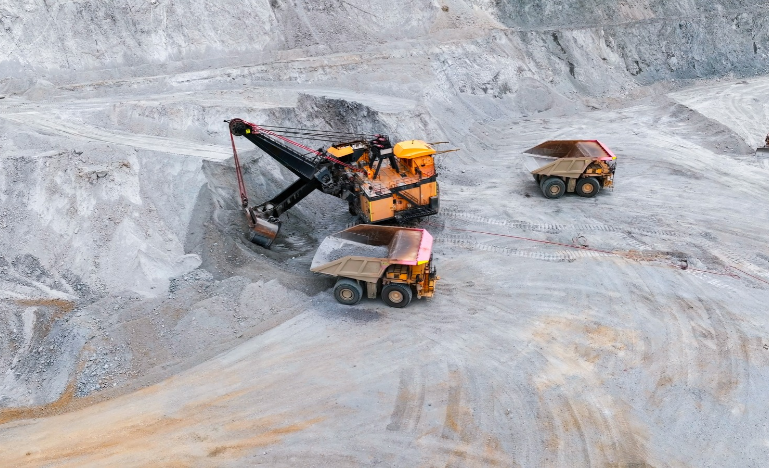
So, if the bill passes as is, could the government effectively treat certain legal findings as having been satisfied without the usual project-specific review or the usual consultation procedures required for something like a mining project?
Tao says one angle that has a lot of people concerned related to the constitutional duty to consult with Indigenous peoples.
“It’s leaving it to speculation whether that'll be rigorous enough.”
Daly says it’s important to distinguish between what's constitutionally required and what's simply a matter of statutory law.
“In terms of constitutional requirements, the two big ones are the duty to consult Indigenous peoples and the availability of meaningful judicial review of exercises of public power, such as granting permits to engage in activity that you couldn't otherwise engage in, like building pipelines and so on.”
He says it's difficult to know exactly how consultation should proceed under Bill C-39 because we’ve never before had the type of project designation structure that it’s proposing.
“Normally when we think about consultation, we think, there's a pipeline, consult on the pipeline or on the individual permits that are needed in the pipeline process,” Daly says.
“Bill C-39 would sort of change that by rolling all this into one decision. But the extent to which you can do that and the extent to which there might be a constitutional requirement of consultation at the point where you designate a particular project or a particular region, that is uncertain and will have to be worked out in practice.”
In terms of meaningful judicial review, the deeming provisions in the bill state that once the project proponent has filed all of their paperwork, the minister can then deem the relevant approval to be given.
“Under the Fisheries Act or under the Species at Risk Act, it seems that the proponent would have to do all the paperwork, they'd have to make their application…It’s not clear exactly what the minister will do, but he can simply say this is deemed to be approved,” he says.
Ordinarily, when a minister makes a consequential decision like that, there can be judicial review in Federal Court to make sure the exercise of power was justified, transparent, and intelligible. Skeptics of Bill C-39 say this is an attempt to circumvent the ordinary process of judicial review by making it automatic and deeming decisions to have been made, Daly says.
“Personally, my concern with this approach is that the litigation that it is likely to prompt and has already prompted may take many years to resolve.”
The legislation attempts to address this by channeling all challenges into the Federal Court of Appeal directly. While he doesn’t think there's a constitutional problem with that, there is a resource problem.
“You’re asking a Federal Court of Appeal which already is underfunded, which already is struggling, to take on a massive new body of work dealing with novel and complex constitutional and statutory interpretation issues," Daly says.
“So, whether this will, at the end of the day, result in projects actually being approved and shovels being in the ground within one year, as the government hopes, I think is very much open to question.”
Tune into the full episode to hear if our experts think there is a way to achieve faster approvals without compromising regulatory independence and the rule of law. Also, why it’s important for Canadians to be paying attention to independent regulatory processes.