Members
Why the ‘living tree’ must grow to protect children and their climate future
On the International Day of the Rights of the Child, it’s time to ask whether Canada’s Charter is ready to protect the generation that will bear the greatest consequences of our climate inaction.
BY Anne Lavesque & Nathalie Chalifour & Lynda Collins & Mona Paré 20 Nov. 2026

Log in to listen to this article
This year’s International Day of the Rights of the Child comes at a particularly significant moment in Canada. It takes place against the backdrop of the landmark youth-led climate change trial, La Rose v. His Majesty the King, which began last month. It is the first case in Canada to proceed to a full trial with live testimony examining whether the federal government's failure to take meaningful action to curb climate change violates children's rights under the Canadian Charter of Rights and Freedoms.
The litigation raises questions that go to the very heart of our constitutional democracy: What does it mean to guarantee fundamental rights in a world transformed by the climate crisis? And whose interests does our Constitution protect when the political decisions of today will determine the lives of generations to come?
At its core, this is a question about how we interpret the rights guaranteed by the Charter and whether we are willing to interpret them in light of new realities such as climate change.
Does the Charter really protect children?
The Charter guarantees everyone the right to life, liberty and security of the person under section 7, as well as equality under section 15. For children, these guarantees cannot be meaningfully understood without considering the environment in which they must grow, develop and build their futures. A stable climate and a healthy environment are not luxuries or abstract policy aspirations. They are fundamental conditions for life, health, security, and human dignity and thus preconditions to the full realization of human rights.
Climate change also deepens existing inequalities, raising important questions about the protection of the right to equality under section 15 of the Charter. Children are particularly vulnerable to its effects, both because of their physical and developmental circumstances and because of the length of time they will have to live with the consequences of decisions made today.
At the La Rose trial, young plaintiffs and experts testified about the impacts of extreme heat, wildfires, flooding, food insecurity and environmental degradation on young generations. These impacts will shape their health, opportunities, and life prospects for decades to come, long after the adults making these decisions today are gone, leaving today’s children to live with the consequences of choices they had no part in making.
Yet children have little say in the political decisions that expose them to these risks. They cannot vote. They are not represented in Parliament. They cannot financially support political campaigns for candidates committed to protecting their future and ensuring a stable climate.
This creates a fundamental democratic problem. If those most affected by government decisions are excluded from the political process, who ensures that their interests are taken seriously? Who protects them against the tyranny of the majority when that majority is composed of adults making decisions whose consequences will fall disproportionately on children?
The courts have an important role to play. The young plaintiffs know this. In their words, when they joined the case as children seven years ago, it was not only out of fear for their future but also hope.
Interpreting the Charter to protect children’s rights
Of course, climate change was not at the forefront of the minds of the Charter's framers in 1982. Nor were the full implications of the climate crisis understood as they are today. But that is precisely why constitutional interpretation cannot be frozen in time. The Charter was never intended to be a static document, confined to the social, political, and scientific realities of the moment it was adopted.
The Supreme Court of Canada has long embraced the living tree doctrine: the Constitution must be interpreted in a broad and progressive manner, capable of adapting to changing circumstances while remaining faithful to its underlying principles. Our Constitution is not a museum piece. It is a living instrument, intended to protect rights as society evolves.
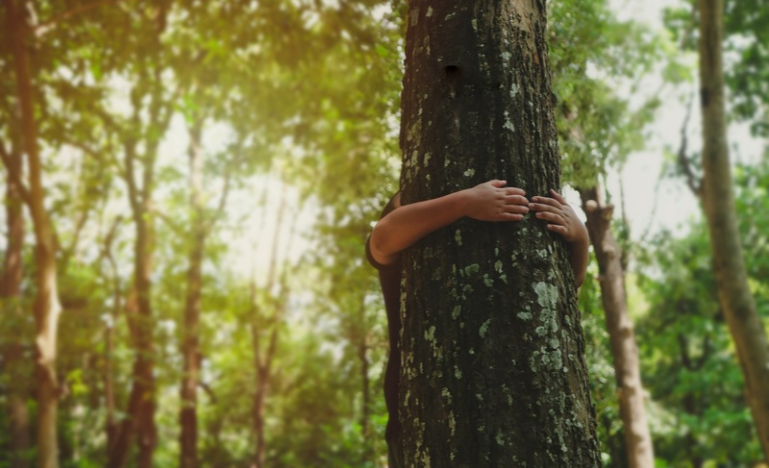
There is something particularly fitting about invoking the living tree doctrine in the context of climate justice. Trees sustain life: they provide the clean air, water, and shelter on which human and planetary health depend. If trees are essential to protecting life, should the Constitution not evolve to protect the natural world that makes life possible? Leading constitutional law scholars have argued precisely this, calling for an ecological reading of the Constitution. This is also essential to protecting children’s rights.
In its unanimous advisory opinion last year, the International Court of Justice recognized that the right to a clean, healthy, and sustainable environment is a precondition for the enjoyment of other human rights, including the right to life, and that states must take necessary measures to protect the climate system to ensure the effective enjoyment of those rights.
Similarly, the United Nations Committee on the Rights of the Child has recognized that children’s right to life is threatened by environmental degradation, including climate change, and that states should take positive measures to protect children from foreseeable threats to their lives by adopting and effectively implementing environmental standards.
Canada should not assume that our Charter is incapable of meeting this challenge. Its guarantees are expressed in broad language precisely because they must endure through changing political, social, and environmental realities.
Time for the living tree to grow
Canadians have good reason to be proud of their Charter. It protects fundamental rights against changing political winds and shifting government priorities. It has provided a voice and a measure of protection to asylum seekers, individuals accused of crimes, and linguistic minorities. It reminds us that constitutional rights matter most when their protection is inconvenient or unpopular.
But our constitutional journey is not complete. The Supreme Court has yet to recognize a successful claim of age discrimination for children under section 15 or affirm children’s right to security under section 7. Children, whose futures are shaped by today’s political majority, remain among those whose equality claims deserve meaningful constitutional consideration.
Although the section 15 claim in La Rose did not survive to trial, it remains alive in another youth-led climate case, Mathur v Ontario, where the province repealed the challenged provisions days before a scheduled hearing and now argues the youth have no basis for their claim. This case will be heard by the Ontario Superior Court, likely in the spring.
We should not have to wait until today's children become tomorrow's adults to recognize that their rights matter. Their interests are not simply aspirational considerations to be balanced against the electorate’s immediate preferences. They are rights-holders, entitled to the full protection of the Constitution.
It is time for Canada's living tree to grow. And it is time for the Charter to protect not only the rights of generations past and present, but also the children whose future depends on the choices we make today.
* Views expressed are not necessarily those of the Canadian Bar Association.