Members
More than a profession
Helping trans Americans find safety in Canada has become a mission, a calling, and a responsibility I carry to bed with me at night and wake up with in the morning.
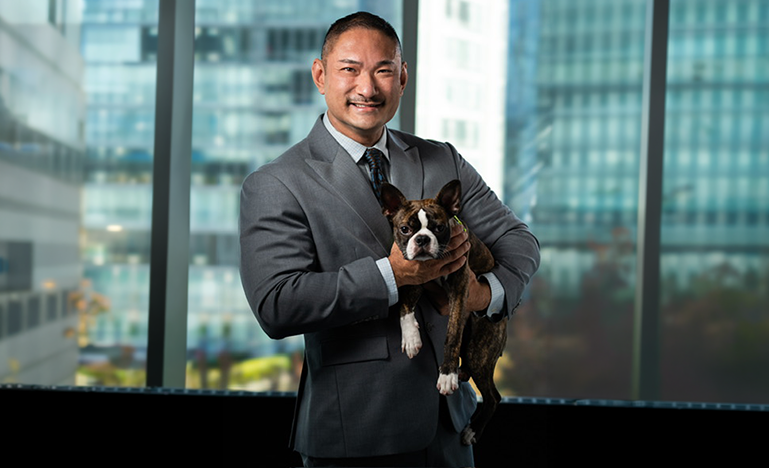
BY Brian Yuen 2 Jun. 2026

Log in to listen to this article
I've been a lawyer for 18 years. Most days, it's paperwork and deadlines—the quiet machinery of immigration law. Forms stacked on forms, part of the slow grind toward someone else's freedom. But recently, a day reminded me of why I ever wanted this job in the first place.
There have been many moments over the years that stick with me. A flash of relief in someone's eyes across a conference table. The crack in a voice when they finally say thank you. Tears you didn't expect, falling down your own face in a courtroom hallway. But this wasn't just a win on paper. This was a life. Two lives, actually. And a border that, for once, opened instead of closed.
The intersection of law and survival
When Bill C-12 passed in late 2025, my office became a beacon. For American clients looking north, confirming Canadian citizenship isn't just about heritage anymore—it's a lifeline, a way out. Over the past year, helping LGBTQ+ asylum seekers has taken on a new, urgent weight. I've been working with non-binary folks fleeing escalating hostility in the United States. People who just want to exist without having to look over their shoulder. People who are tired.
Then two worlds collided.
I met a client I will never forget. An American non-binary person trying to confirm their Canadian roots and their partner, also non-binary, who simply wanted the right to live without fear. They had found a home waiting in the Vancouver area, an apartment with their name on it. But the 49th parallel still stood between them and safety — a line on a map. And sometimes, lines on maps become walls.
A tense vigil
I knew the risks. Through my network of fellow LGBTQ+ refugee lawyers, we'd heard the stories of non-binary travellers turned away by the Canada Border Services Agency for no reason other than who they were. I couldn't let them face that alone. So I gave them my cell number. A lifeline, just in case the gates stayed shut.
On Good Friday, I tried to eat dinner. I barely tasted it. Around me, the world moved at a casual end-of-week pace, with people laughing, making plans, and living ordinary lives. But my heart was at the border. I was a wreck. Eyes glued to my phone. Running through every possible scenario, every legal argument I might need to pull out in an instant to keep them safe. I only got three hours of sleep the night before. I suspect they didn't get much more.
The gateway opens
Then the text came.
"They're letting us in!!!"
I read it twice. Then a third time. My hands were shaking.
The officer had reviewed their citizenship application. It held firm. But the real miracle—the thing I keep coming back to—was the compassion shown to their partner. We had braced for the worst. Ready to file a basis of claim for refugee status right there at the land border, ready to fight. Instead, the officer issued a three-month visitor record. A bridge. A beginning.
My client messaged me, moved to tears by the respect they'd been shown and started crying in front of the customs officer. I was so scared they were going to turn us away.
Officer Bayek—or Birek, I'll get his name right—asked my client's partner what gender they wanted entered for the visa. He brought tissues. He said they didn't need to provide a specific instance of fear; they just needed to say they were afraid. In a system that so often crushes people with its indifference, he was kind.
And soon, I will meet them for the first time. In real life. Not through a screen, not through text messages that make my heart race during dinner. Face to face. Safe.
Charting new territory
Now they're settling into their new home in the Fraser Valley. There's still paperwork—there's always paperwork. Their car is financed, not leased. The registration is still good in Washington. They'll deal with it later. For now, they're sleeping. For now, they're home.
And I can't stop thinking about what this moment really means.
In 18 years, I've seen a lot. Deportations that broke my heart. Wins that felt like losing because of what came after. But this? We're charting new territory. This is the modern Underground Railroad. It looks a lot like the stories from The Handmaid's Tale, except it's real, it's happening now, and the people crossing the border are not characters in a novel. They are someone's partner. Someone's neighbour. Someone who cried in front of a customs officer because they were so afraid, and then cried again because they didn't have to be.
I hope I can keep helping. Because of the current political climate and the shifting tides of history, this work has become more than a profession. It's a mission, a calling, and a responsibility I carry to bed with me at night and wake up with in the morning.
Knowing I played a small part in guiding two people out of fear and into the safety of the Canadian wilderness? That's a reward I can't put a price on.
That's why I became a lawyer.
That's why I'll stay one.
Views expressed are not necessarily those of the Canadian Bar Association.